

|
"We're not fusing cuisines. We're rewriting the rules." That is the line on the Sesamo website, and it is not marketing language. It is a culinary position that took years of cooking to arrive at. |
Most fusion restaurants start with a concept and then work backwards to find dishes that fit it. They pick two cuisines, combine their most recognizable elements, and call it creative. The results are usually interesting for about one visit and forgettable after that.
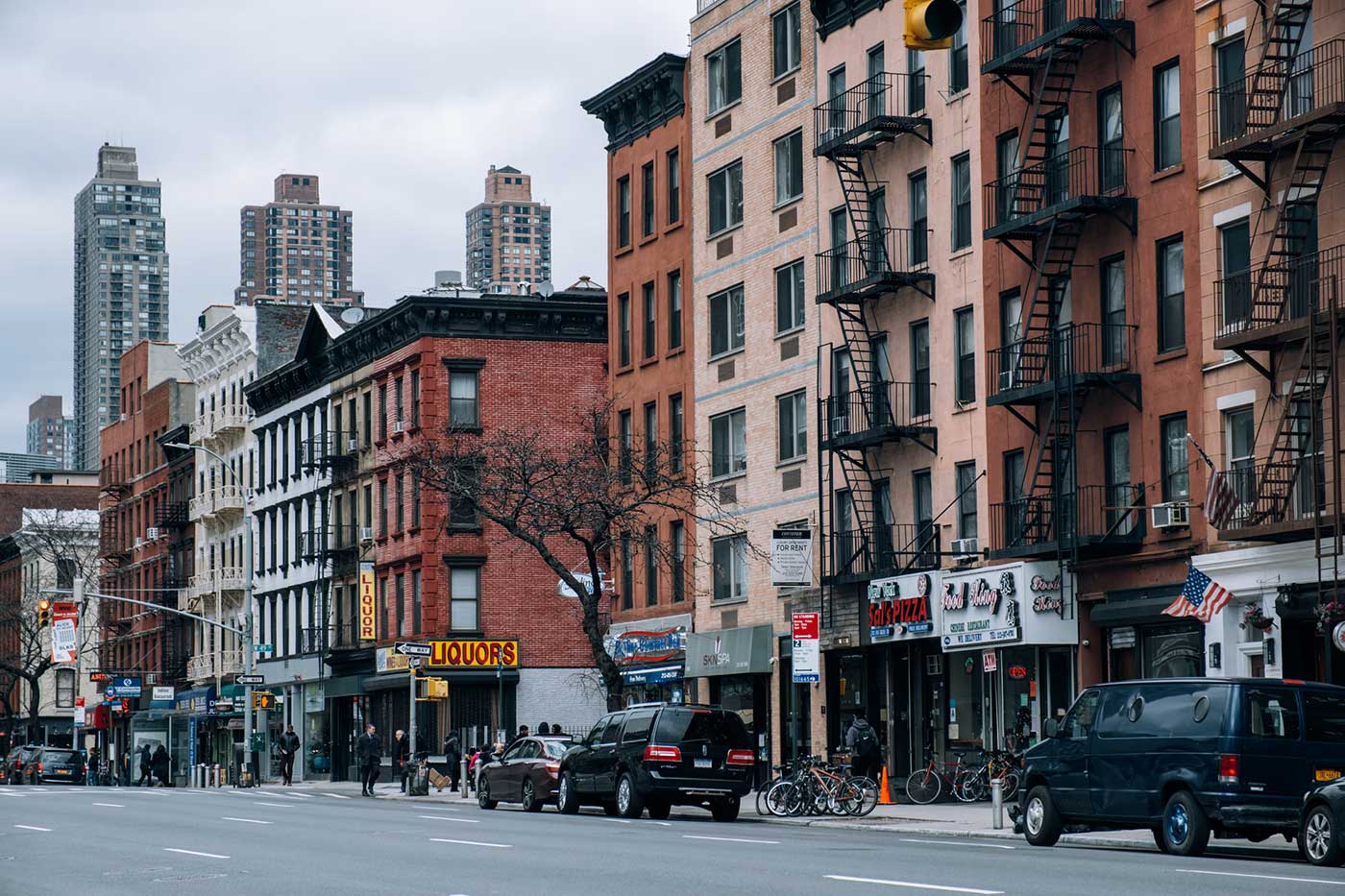
Sesamo, the Italian-Asian fusion restaurant at 764 10th Avenue in Hell's Kitchen, started from the opposite direction. Owner Sabrina Gao grew up in Beijing and came to New York with a deep love of Italian food and wine. Chef Nikita's kitchen thinks carefully about what Italian and Asian cooking actually share at the level of principle rather than ingredient. The result is a restaurant that does not feel like a concept. It feels like a conviction.
This piece is about that conviction: what Italian and Asian cooking genuinely have in common, why the combination at Sesamo works when so many fusion restaurants fail, and how that philosophy translates to specific dishes on the menu.
Table of Contents
The Problem with Most Fusion Restaurants
The word fusion has earned a complicated reputation in the food world. Some of that reputation is deserved. Fusion cooking at its worst is exactly what critics describe: flavor tourism. A chef who understands neither tradition deeply enough to know where they genuinely overlap, so they combine the most recognizable visual elements of each and call it innovative.
The result is a California roll that has nothing to say. An Italian-Japanese menu where the pasta has a miso garnish that was added because miso is trending. A fusion restaurant that is actually just an indecisive one.
The reason Sesamo avoids this failure is not that the food is particularly adventurous. It is that the food is built on a real argument. And the argument is this: Italian and Asian cuisine are not opposing traditions that need to be cleverly bridged. They are parallel traditions that arrived at the same conclusions from different geographical starting points.
Five Principles That Italian and Asian Cooking Share
Before a single dish at Sesamo is designed, these five principles are already in place. They are the reasons the combination works:
|
PRINCIPLE |
THE ITALIAN EXPRESSION |
THE ASIAN EXPRESSION |
|
TIME |
La pazienza Long braises, slow-rising doughs, aged cheeses. Italian cooking does not rush. |
Fermentation and aging Miso, soy, aged black vinegar, dried seafood. Time is the ingredient. |
|
UMAMI |
Parmigiano-Reggiano, anchovies, bottarga Italy pioneered the science of savory depth before the word umami existed. |
Miso, dashi, soy, XO sauce Asian cuisines built entire culinary systems around maximizing savory intensity. |
|
NOTHING WASTED |
Lardo from fatback, tripe, offal Italian peasant cooking used every part of the animal. Fat became luxury. |
Rendered fat, dried offal, fermented scraps Same philosophy: the humble cut, treated with patience, becomes extraordinary. |
|
FIRE |
Wood-fired ovens, char on focaccia High heat applied at the right moment transforms texture and flavor. |
Wok hei, the breath of the wok The same principle: extreme heat for a brief, precise moment. |
|
SEASON |
Porcini in autumn, truffles in winter The Italian table is dictated entirely by what is local and seasonal. |
Spring ramps, winter citrus, summer aromatics Asian cooking traditions are equally tied to the harvest calendar. |
Look at that table and you start to see why the combination is not a stretch. These two food cultures were always speaking the same language. They just developed different vocabularies for it.
The Ingredient Bridge: How the Kitchen Thinks
The most practical expression of the Sesamo philosophy is in how the kitchen maps Italian and Asian ingredients onto each other. Not as substitutions, but as analogs: ingredients from each tradition that are doing the same job from opposite sides of the world.
|
ITALIAN INGREDIENT |
WHAT THEY SHARE |
ASIAN ANALOG |
|
Parmigiano-Reggiano |
The long-aged umami finish |
White miso |
|
Bottarga |
Concentrated sea salt and depth |
XO sauce, dried scallop |
|
Lardo (cured fatback) |
Silky cured fat as an ingredient |
Slow-rendered pork belly fat |
|
Peperoncino |
Background heat, not aggression |
Szechuan chili crisp |
|
Balsamic vinegar |
Sweet-sour acid finish |
Tamarind paste |
|
Soffritto |
Aromatic fat base for sauces |
Fried shallot-garlic-chili base |
|
Aglio e olio fat |
Oil as flavor carrier |
XO oil, chili oil |
This table is not theoretical. It is the working logic of the Sesamo kitchen. When Chef Nikita puts miso into a bolognese in the final hour, it is because miso is the closest thing in the Asian pantry to the long-aged, fermented, savory depth that parmesan provides. It is not a substitution. It is a recognition that both ingredients exist because both cultures were trying to solve the same flavor problem.
The Four Rules That Guide the Sesamo Kitchen
A philosophy without rules is just an attitude. Here is how the Sesamo kitchen has translated this food philosophy into a set of operating principles:
|
RULE 01 Neither tradition gets sacrificed The Italian technique is never watered down to accommodate Asian flavor. The Asian ingredient is never treated as decoration on an otherwise Italian dish. Both have to earn their place, and both have to stay fully themselves. |
RULE 02 The dish decides, not the concept Every item on the Sesamo menu starts as a culinary question rather than a theme exercise. What happens when miso goes into the bolognese in the final hour? What does tamarind do to a slow braise? The answer determines whether the dish gets on the menu. |
|
RULE 03 Built from scratch, finished with fire Nothing at Sesamo comes from a shortcut. Hand-rolled pasta means rolling it today. Slow-braised means overnight. The fire that finishes each dish, the high heat at the crucial moment, is a nod to the wok technique applied to an Italian kitchen. |
RULE 04 Umami is the common language Both Italian and Asian cooking are built on the pursuit of savory depth. Parmesan and miso are doing the same job in different kitchens. Anchovies and dried scallop are different expressions of the same insight. At Sesamo, these double up intentionally. |
The Philosophy in Practice: Four Sesamo Dishes, Explained
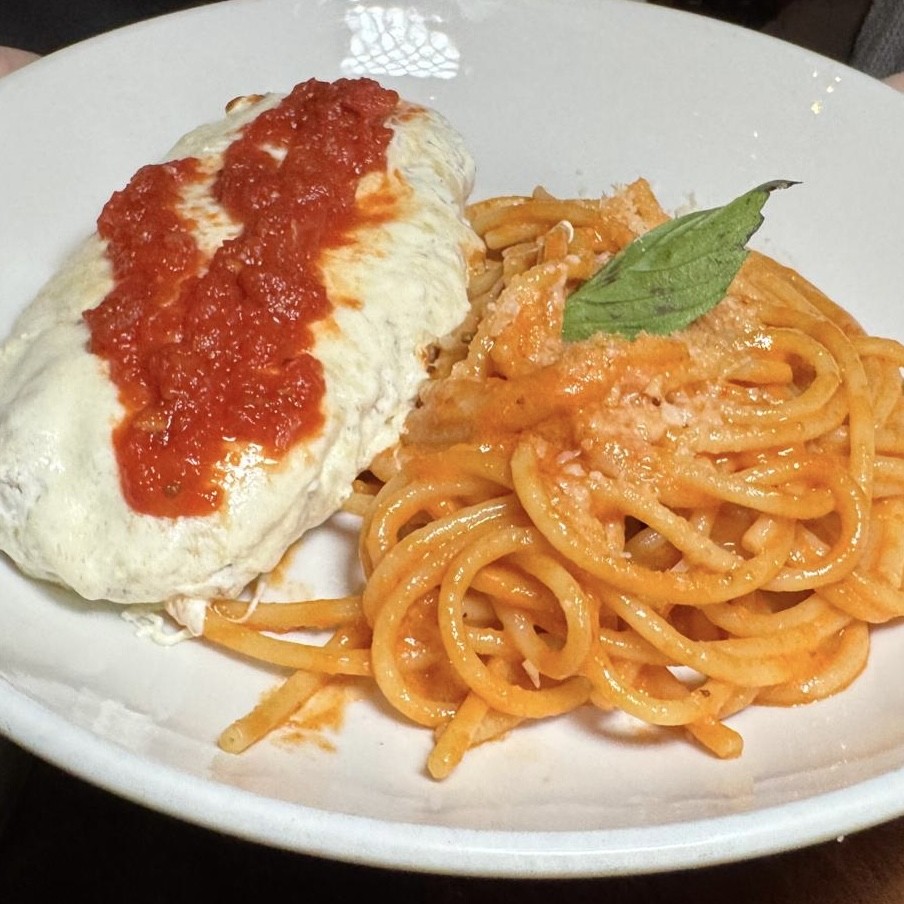
The best way to understand this food philosophy is to look at specific dishes and see how the thinking plays out on the plate. Here are four dishes from the Sesamo menu and the argument behind each one:
|
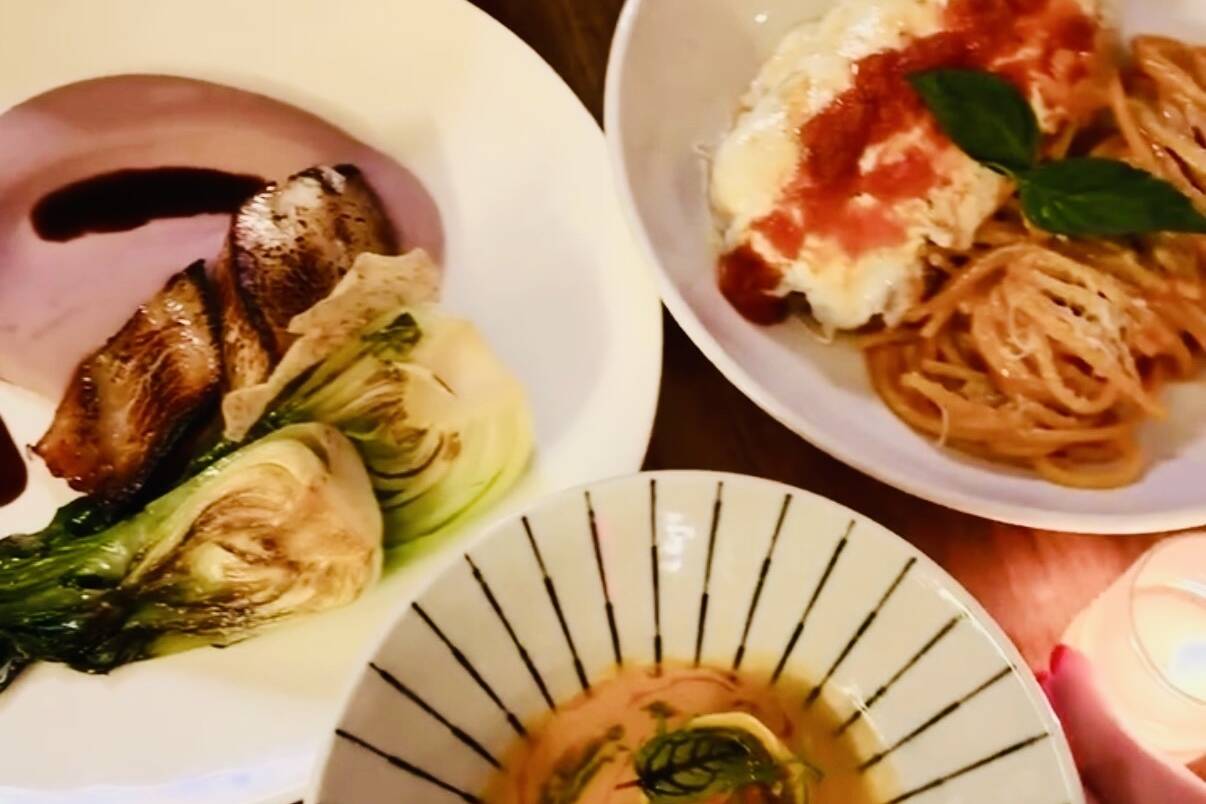
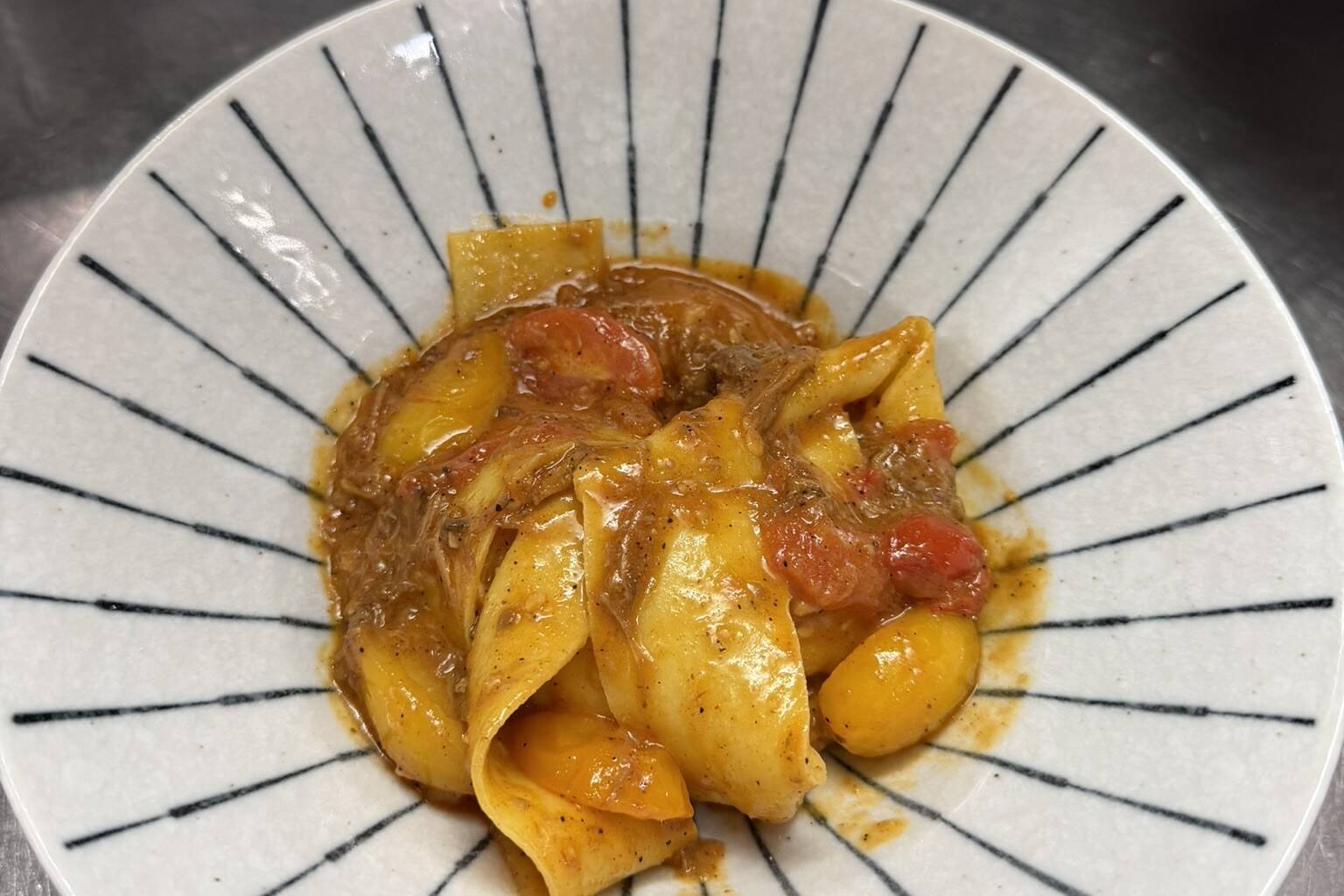
Tamarind Bolognese Bolognese is one of Italy's most codified sauces. Sesamo does not improve it. It asks what happens when the wine-and-tomato acid is replaced with tamarind, and the parmesan umami finish is replaced with miso. The answer is a sauce that belongs to neither tradition and both at once. Element at work: tamarind replaces wine acidity. Miso replaces aged cheese umami. The result is the same flavor logic, completely reimagined. |
|
Lardo-Stuffed Dumplings Lardo is Italian cured fatback: ancient, humble, luxurious. A dumpling is one of Asia's most universal forms: thin skin, concentrated filling, balance through sauce. Putting Italian fat inside Asian skin was not a clever idea. It was an inevitable one, once you understand what both traditions are trying to do. Element at work: Italian ingredient (lardo) treated with Asian technique (paper-thin dumpling skin). The dipping sauce bridges soy and aged balsamic. |
|
Szechuan Pasta Hand-rolled Italian pasta is a vehicle for sauce. Szechuan chili crisp is a sauce that builds numbing heat slowly. Aged parmesan is the salt-and-fat finish that Italian cooking uses to complete a dish. All three work together because all three are solving the same problem: flavor that arrives in layers, not all at once. Element at work: Italian pasta technique carries Asian heat. Parmesan does the same job it does in cacio e pepe: cut through fat, add depth, finish the dish. |
|
Risotto with Thai Basil and Lemongrass A Northern Italian risotto depends on technique: the right stock, the right moment to add butter and cheese, patience with the stir. Sesamo keeps all of that. Then replaces the sage-and-parmesan aromatic profile with Thai basil and lemongrass. The structure is Italian. The aroma is Southeast Asian. Element at work: Italian cooking method (risotto technique unchanged). Asian aromatics replace European ones. The final dish tastes completely new. |
Why This Matters Beyond Sesamo
The Italian-Asian fusion food philosophy at Sesamo is interesting not just as a restaurant concept but as a small demonstration of something bigger: the idea that food cultures are not as distinct as their geographic origins suggest. When you trace the principles rather than the ingredients, the overlaps multiply.
Both Italian and Asian cuisines were built by people who did not have access to luxury ingredients and had to make extraordinary food from what was available. Both developed fermentation as a flavor tool before they had refrigeration. Both built their most celebrated dishes around patience, fire, and the intelligence of simplicity.
The Sesamo kitchen is not trying to make a point about cultural fusion in a broader sense. It is trying to cook well. But cooking well, in this case, means understanding two traditions deeply enough to find where they genuinely belong together. And the place where they belong together turns out to be the menu at 764 10th Avenue in Hell's Kitchen.
|
Sesamo is named after sesame seeds, one of the most universally used ingredients in the world, found in Italian, Chinese, Japanese, Middle Eastern, and Indian cooking alike. The name is the philosophy in a single ingredient. |
Come and Taste the Argument
A food philosophy is only worth anything if the food is good. The tamarind bolognese, the lardo-stuffed dumplings, the Szechuan pasta, the Thai basil lemongrass risotto: these dishes exist because a real argument was made, tested, refined, and put in front of diners. The argument has been convincing enough to earn Sesamo coverage in Forbes, TimeOut New York, Noms Magazine, and W42nd.
The best way to engage with the philosophy is to eat the food. Come in for dinner any night of the week from 4:30pm to 10pm. Sit at the bar if you are solo. Book a table on Resy if you are planning ahead. Let the kitchen make the case.
|
Experience the Italian-Asian Philosophy at Sesamo 764 10th Avenue, New York, NY 10019 | (212) 265-2755 | sesamorestaurant.com Dinner Mon-Sun 4:30pm-10pm | Aperitif Hour Sun-Thu 4-7pm | Walk-ins welcome at the bar | Book on Resy |
Plan your visit: Explore the full Sesamo menu, Italian-Asian fusion at 764 10th Avenue in Hell’s Kitchen, NYC. Discover more at sesamorestaurant.com.