

If you search for lardo dumplings in New York City, you will find exactly one result that matters. Sesamo, on 10th Avenue in Hell's Kitchen, serves lardo-stuffed dumplings as part of its regular menu: Italian cured fatback inside paper-thin Asian dumpling skin, finished with a dipping sauce that sits somewhere between soy and aged balsamic. There is nothing like this dish anywhere else in the city.
That is not marketing language. It is a verifiable fact about a dish that has zero competition and occupies its own category entirely. The search term 'lardo dumpling NYC' returns virtually nothing because this dish, in this form, exists at one restaurant. After you read this, you will understand why that is remarkable, and you will probably make a reservation.
Table of Contents
What Is a Lardo Dumpling?
Let's start from the beginning, because not everyone is familiar with lardo. It is worth understanding before you eat it.
|
WHAT EXACTLY IS LARDO? A short primer for anyone who has not encountered it before |
|
Lardo is Italian cured fatback: the layer of pure white fat taken from just below the pork skin, cured in sea salt, herbs, and sometimes white wine or rosemary for several months. Unlike bacon fat or rendered cooking fat, lardo is cured at low temperatures so it never becomes crispy or cooked. It stays silky. The most celebrated version is Lardo di Colonnata from Tuscany, cured in white Carrara marble basins for six months to two years. When sliced thin, it becomes nearly translucent and melts instantly at body temperature. It is not bacon. It is not prosciutto. It is not lard (rendered fat). It is its own thing entirely: a delicate, herbaceous cured product that tastes nothing like what most people expect when they hear the word fat. Sesamo takes this Italian ingredient and puts it inside an Asian dumpling. The fat provides the filling. The dumpling skin contains it. The dipping sauce balances it. The combination should not work as well as it does. |
The Two Traditions Behind This One Dish
The lardo-stuffed dumpling at Sesamo is the result of two distinct food cultures arriving at a shared principle: use the simplest, most honest ingredients and transform them through time and technique into something extraordinary. Here is what each tradition brings to the dish:
|
The Italian Tradition Lardo is one of Italy's oldest preserved foods. Charcuterie in general is Italy's answer to the problem of nothing going to waste. Curing the fat back preserves it for months and produces something with more flavor than almost any other cut of pork. Traditionally served thin-sliced on warm bread so the fat melts on contact, lardo is both humble and luxurious: the cheapest cut of the animal made to taste like the most expensive. |
The Asian Tradition The dumpling is one of Asia's most universal foods, with regional variations across China, Japan, Korea, and Southeast Asia. What unites them is the principle: a thin wrapper containing an intensely flavored filling, served with a sauce designed to balance it. Chinese-style dumplings in particular emphasize the quality and thinness of the skin as much as the filling. A thick-skinned dumpling is a mediocre dumpling. The skin should be almost invisible. |
|
Sesamo's lardo-stuffed dumpling is the point where these two traditions meet: Italian fat treated with the technique required by Asian skin. The result says something specific about who built this restaurant and why. |
|
The Complete Anatomy of the Dish
Here is what is actually happening across each component of the lardo dumpling, layer by layer:
|
ELEMENT |
WHAT IT IS |
WHERE IT COMES FROM |
WHY IT WORKS IN THIS DISH |
|
THE FAT |
Ingredient Lardo (cured fatback) Pork back fat cured in salt, herbs, white wine |
Origin Italian charcuterie tradition Colonnata lardo is the most famous; cured in marble |
Why it works Melts at body temperature Renders into silk in your mouth, never greasy |
|
THE SKIN |
Ingredient Dumpling wrapper Paper-thin, hand-stretched, translucent when steamed |
Origin Asian dumpling tradition Delicate skin is a mark of skilled dumpling craft |
Why it works Contains the fat without obscuring it Allows the lardo to be the hero of the bite |
|
THE SAUCE |
Ingredient Dipping sauce Moves between soy sauce and aged balsamic |
Flavor logic Salty-sweet-sour combination Cuts through the fat and balances richness |
The bridge Italian acid meets Asian salt One sauce, two traditions, perfect result |
|
THE BITE |
The experience Three elements at once Fat, skin, sauce arrive simultaneously |
What you taste Rich, delicate, sharp, clean In that order, then it fades perfectly |
Why people order again There is nothing like it in NYC Zero competition. Only at Sesamo. |
How the Dipping Sauce Makes It Work
The sauce is not an afterthought. A dumpling filled with pure cured fat is a rich, intensely flavored thing. Without the right counterpoint, it overwhelms. Sesamo's dipping sauce sits between soy sauce and aged balsamic, which means it provides both saltiness and a wine-derived acidity that Italian cured meat is designed to be served with.
This is the same logic that makes prosciutto and balsamic work. It is the same logic that makes fatback and vinegar work in traditional Tuscan cooking. Sesamo applies that logic through an Asian form. The sauce is the bridge that makes the Italian-Asian concept feel inevitable rather than contrived.
Why No One Else Makes This Dish
The reason lardo dumplings do not exist at other restaurants in New York is not because no one has thought of it. It is because the dish requires specific knowledge of and genuine respect for both traditions involved.
- You need to understand lardo deeply: how it behaves at temperature, how its fat renders differently from other cured pork products, how thin the skin needs to be to let the fat perform correctly without bursting.
- You need to understand dumpling craft: how to stretch the skin to near-translucency without tearing it, how to fold and seal it so the filling stays contained through steaming.
- You need to understand the sauce: how to balance soy's sharp saltiness against balsamic's sweet acidity so neither cancels the other out, and both serve the fat in the dumpling.
Sesamo has all three of these competencies because it was built by people who grew up with one tradition and deeply respect the other. Owner Sabrina Gao was born in Beijing and loves Italian food. Chef Nikita runs a kitchen built on the premise that the two traditions are natural partners. The lardo dumpling is the dish that proves them both right.
|
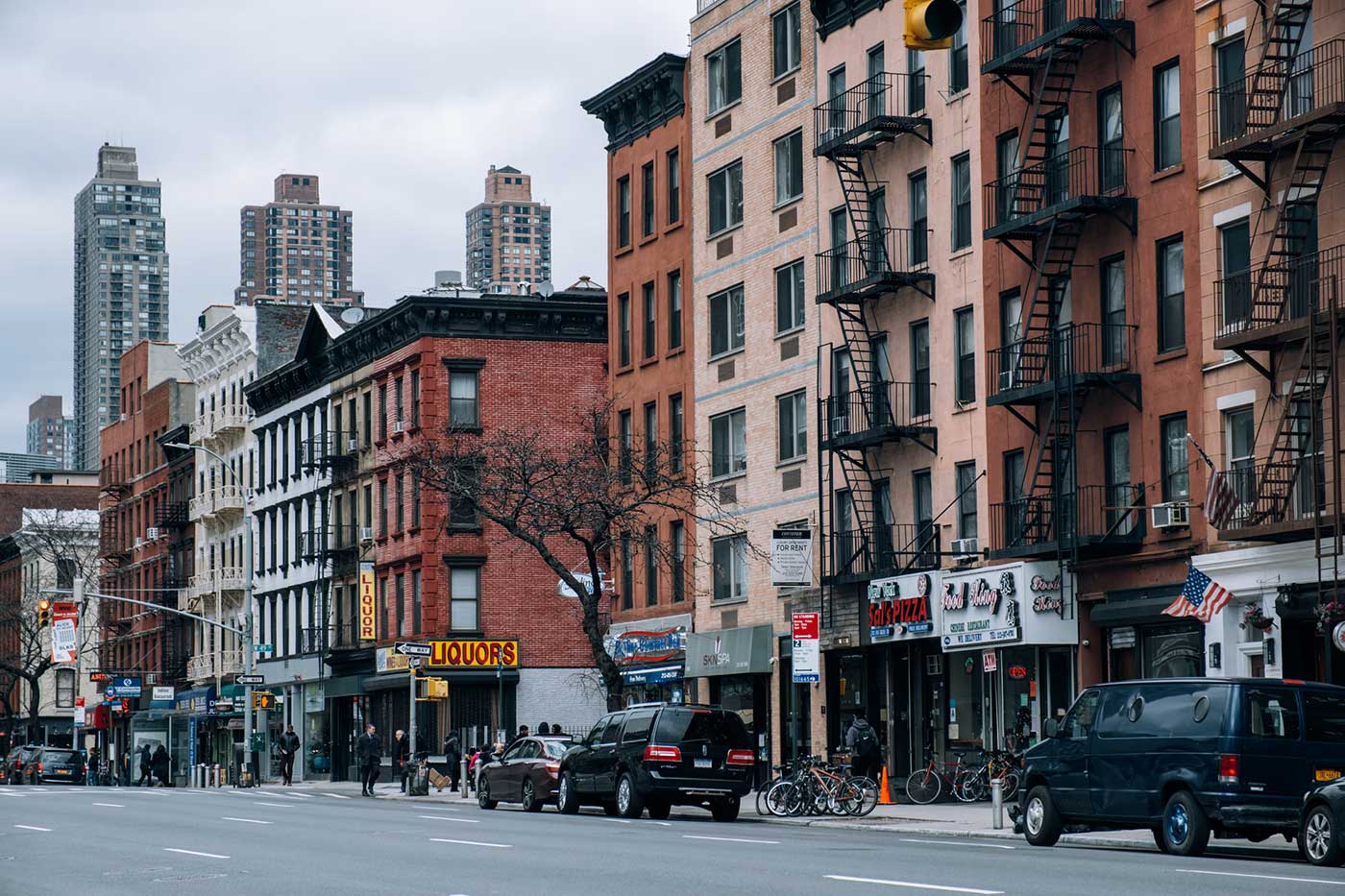
Sesamo has been featured in Forbes, TimeOut New York, Noms Magazine, and W42nd. The lardo-stuffed dumpling is a standing menu item, available every dinner service at 764 10th Avenue in Hell's Kitchen. |
Traditional vs. Sesamo: What Changes and What Stays the Same
For context, here is how the Sesamo dumpling compares to traditional dumplings in every measurable dimension:
|
TRADITIONAL ASIAN DUMPLING |
SESAMO LARDO DUMPLING |
|
|
Filling tradition |
Pork, chive, cabbage, shrimp, mushroom |
Italian cured fatback, herb-cured |
|
Skin thickness |
Medium to thick, wheat-based |
Paper-thin, stretched to translucency |
|
Cooking method |
Steamed, pan-fried, boiled, or soup |
Steamed to let the fat render gently |
|
Dipping sauce |
Soy sauce, vinegar, chili oil |
Soy-balsamic hybrid: two traditions in one |
|
Flavor goal |
Savory protein with aromatics |
Pure fat richness, cut by acidity |
|
Where you find it |
Dim sum halls, dumplings shops |
Only at Sesamo, 764 10th Ave, Hell's Kitchen |
The Dish in Context: How It Fits into the Full Sesamo Experience
The lardo dumpling is the opening statement of a meal at Sesamo. It tells you immediately, before anything else arrives, what kind of kitchen you are dealing with and what the rest of the evening will feel like. Here is how to build around it:
|
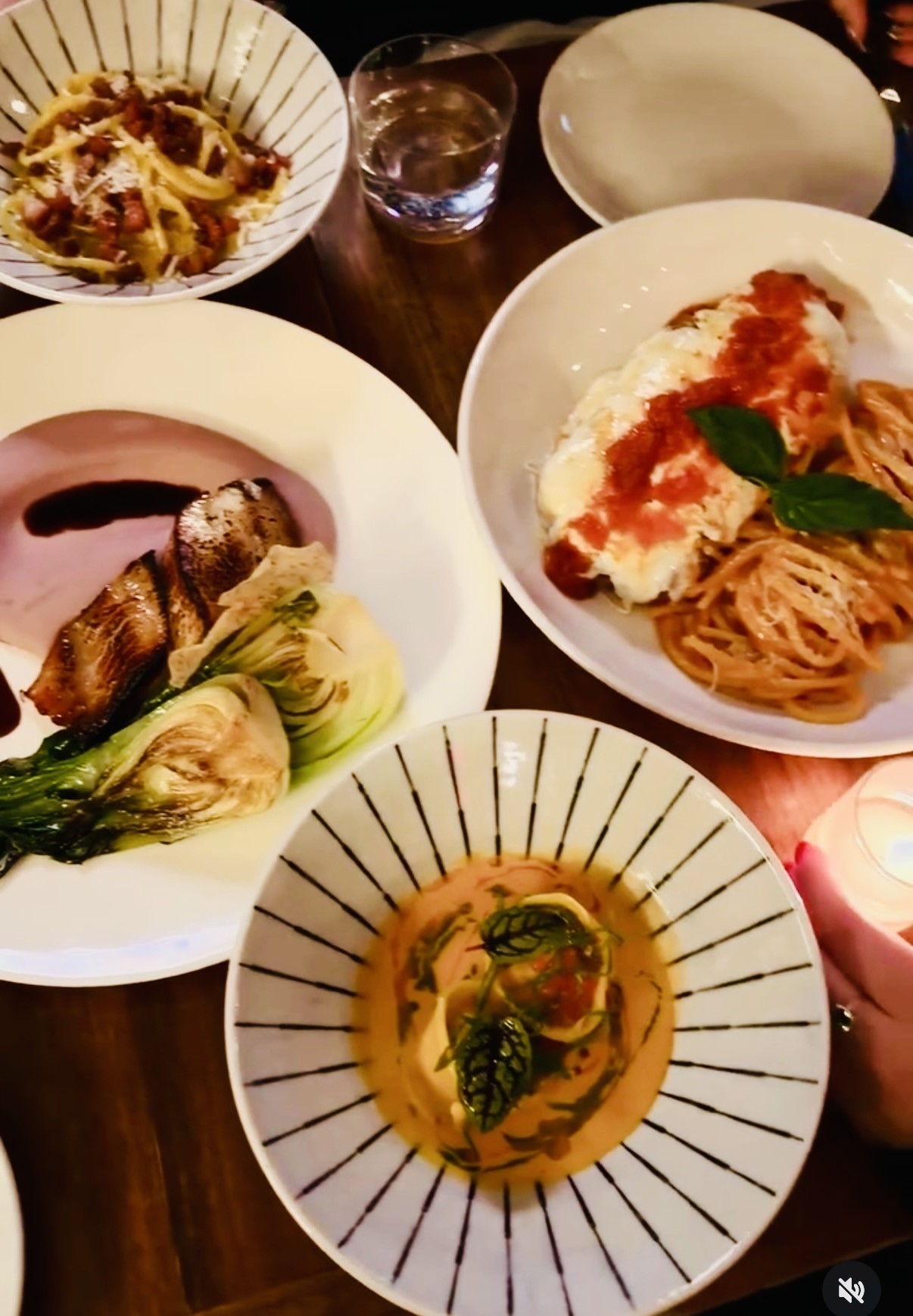
Lardo-Stuffed Dumplings Order this first Paper-thin skin, cured Italian fatback filling, soy-balsamic dipping sauce. Three components. Zero waste. This is the dish that tells you immediately who Sesamo is and what the rest of the meal will feel like. |
Beef Tartare Order this if it's on the menu Premium tenderloin, soy sauce-cured egg yolk, Sullivan Street Bakery sourdough. The soy-cured yolk is the detail that sets this apart from every other tartare in Midtown. Silky, clean, confident. |
|
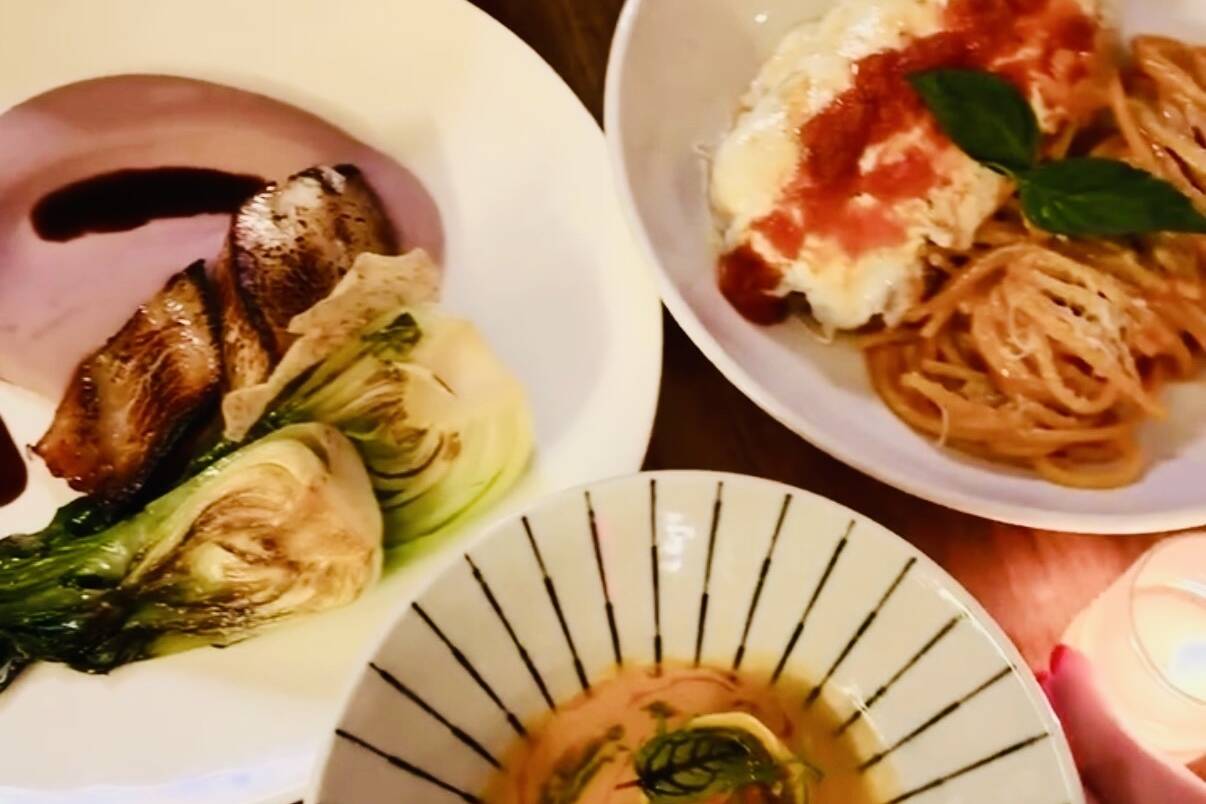
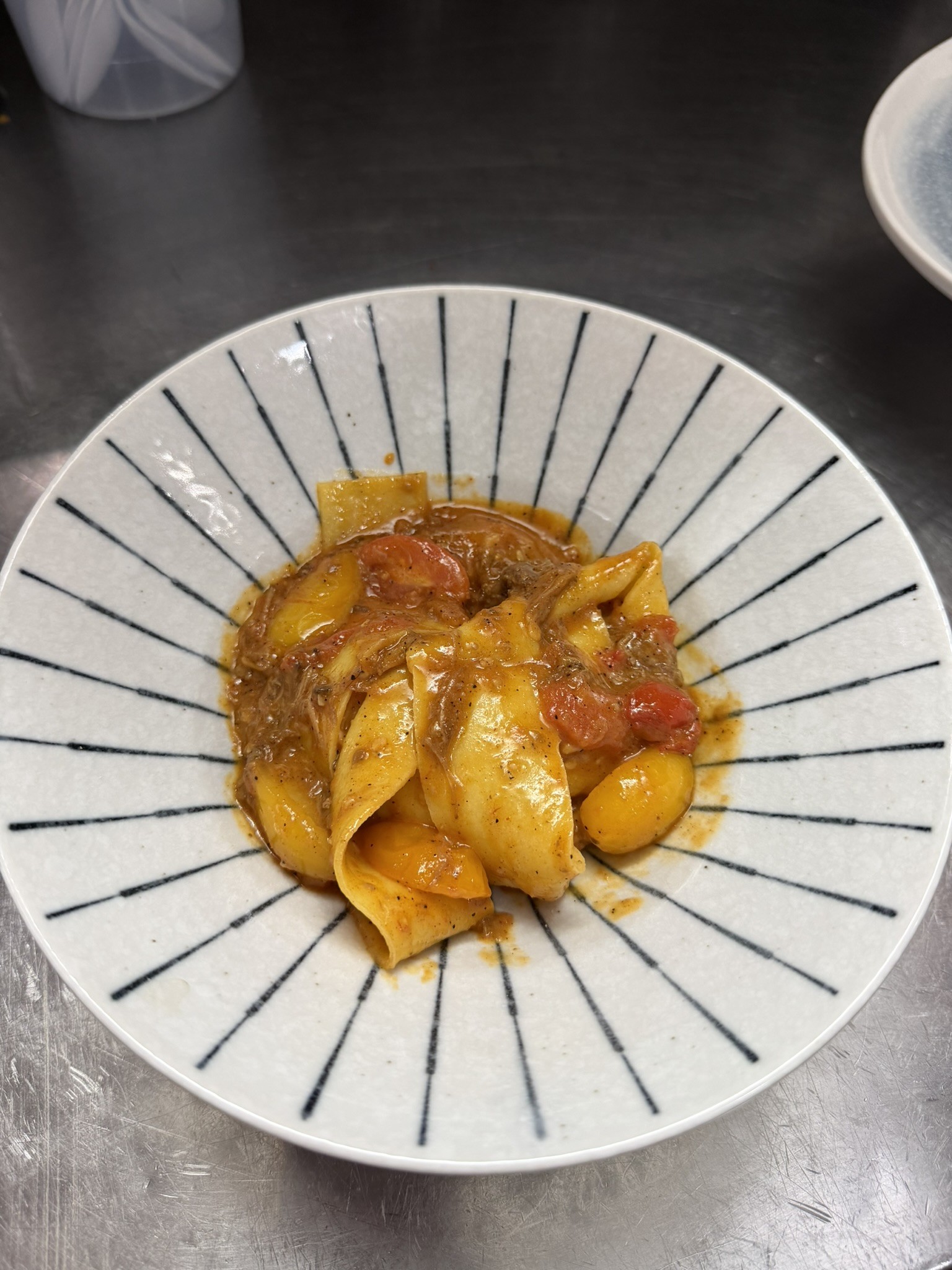
Tamarind Bolognese The dish people drive across the city for Slow-braised beef, tamarind, miso, hand-rolled pasta. An overnight braise, a third tradition of fermentation, and pasta made this morning. Order it. |
Szechuan Pasta For the heat seekers Hand-rolled noodles, Szechuan chili crisp, aged parmesan. The heat builds gradually and the parmesan cuts through cleanly. Italian structure, Asian fire. |
|
Thai Basil Lemongrass Risotto The dish that proves the concept Creamy risotto, Thai basil, lemongrass. Italian technique in the grain, Southeast Asian in the aroma. This is what Sesamo means by Italian roots, Asian soul. |
Something from Sabrina's wine list Ask for a pairing recommendation Sommelier and owner Sabrina Gao curates a natural wine list designed around these exact flavors. The by-the-glass pours rotate. During Aperitif Hour, the cocktails are exceptional too. |
First-Timer Tips: How to Get the Most from Sesamo
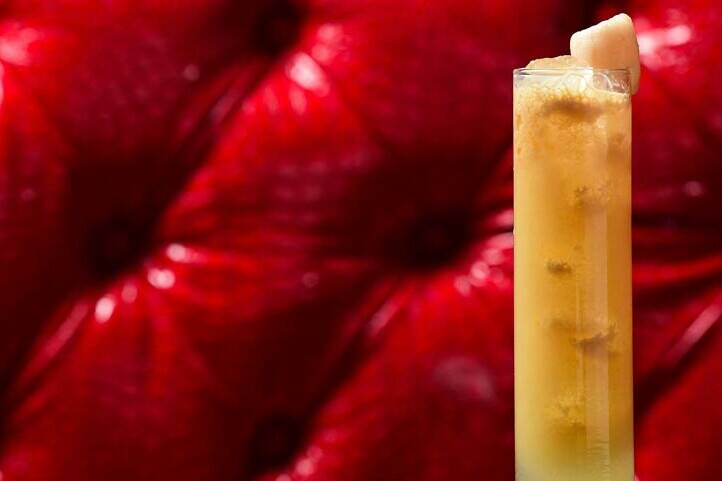
- Arrive during Aperitif Hour: Sunday through Thursday from 4pm to 7pm, the bar runs cocktail and bar snack specials. Order a cocktail while you decide between the menu items. The yuzu-based drinks are the place to start.
- Sit at the bar if you are solo: Walk-ins are always welcome at the bar. No reservation needed. Full menu available. The bar team at Sesamo is knowledgeable and will guide you through the menu without pressure.
- Order the lardo dumplings first, not as a side: They are a first course, not an accompaniment. They need your full attention when they arrive and taste best when eaten immediately.
- Ask about the wine pairing: Sabrina Gao's wine list is built specifically around these flavors. A medium-bodied Italian white is the pairing that works across the most dishes on the menu, including the dumplings.
- Save room for pasta: The tamarind bolognese on hand-rolled pasta is the other must-order dish. Between the dumplings and the bolognese, you will have eaten the two dishes that best explain what Sesamo is.
How to Book
Dinner runs Monday through Sunday from 4:30pm to 10pm. Book a table on Resy or walk-in at the bar any night of the week. Brunch is available Saturday and Sunday from 11:30am to 3pm. The Theater Prix Fixe at $60 per person runs every dinner service and includes three courses timed for Broadway shows.
Sesamo is at the corner of 10th Avenue and 52nd Street in Hell's Kitchen. The A, C, E lines at 42nd Street and the C, E at 50th Street are the closest subway stops. The neighborhood is 12 minutes on foot from most Broadway theaters.
|
Try the Lardo Dumplings at Sesamo Tonight 764 10th Avenue, New York, NY 10019 | (212) 265-2755 | sesamorestaurant.com Dinner Mon-Sun 4:30pm-10pm | Aperitif Hour Sun-Thu 4-7pm | Walk-ins welcome at the bar | Book on Resy |
Plan your visit: Explore the full Sesamo menu, Italian-Asian fusion at 764 10th Avenue in Hell’s Kitchen, NYC. Discover more at sesamorestaurant.com.