

Table of Contents
Delicious Chicken and Vegetable Risotto Made Simple
The Science of Creamy Risotto: Rice Selection and Technique
To make a creamy chicken and vegetable risotto, sauté aromatics in olive oil, toast unrinsed high-starch rice (such as Arborio or Carnaroli) until translucent, and deglaze with white wine or lemon water. Slowly add simmering chicken broth one ladle at a time, stirring regularly over medium heat for 18 to 22 minutes as the rice absorbs the liquid. Fold in seared chicken and tender-crisp vegetables near the end of cooking, then remove from heat and vigorously stir in cold butter and freshly grated Parmesan to create a rich, glossy emulsion.
Achieving that velvety texture at home does not require heavy creams or thickeners; it is born from the mechanical breakdown of surface starches on specialized short-to-medium grain rice.
When you cook long-grain rice like basmati or jasmine, the goal is separate, fluffy grains. These grains are packed with amylose, a starch molecule that holds its structure in hot water. Risotto rices, by contrast, are loaded with amylopectin. This branching starch molecule readily dissolves into simmering liquid when agitated, suspending tiny droplets of cooking fat and broth into a stable, velvety sauce known in Italian kitchens as an emulsion.
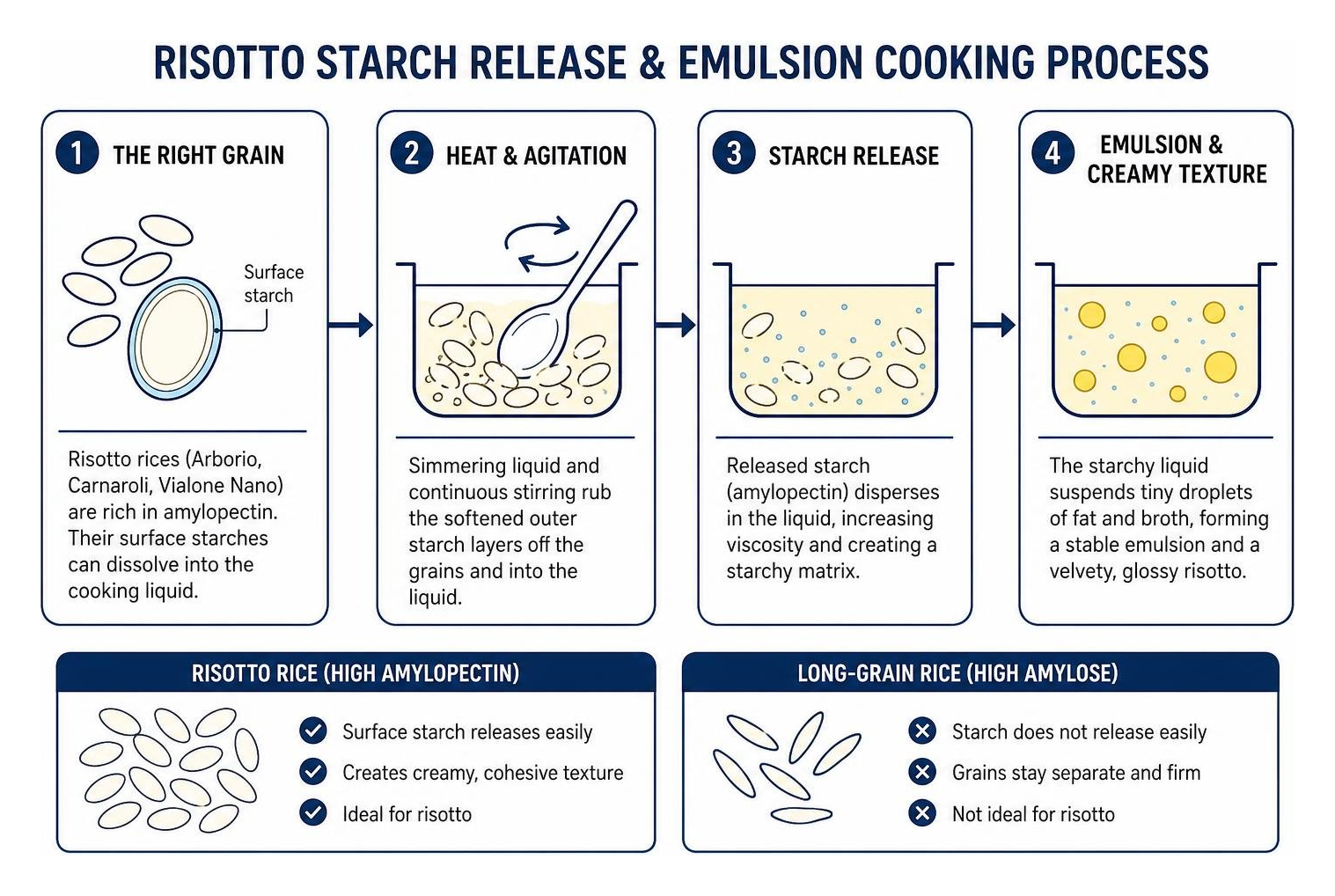
To create that reaction, two factors are essential: the correct grain and active friction. Agitating the grains against one another with a wooden spoon rubs the softened outer starch layers into the liquid. If the stock is cold, it drops the pan temperature, stalls cooking, and leaves the rice hard in the center. Keeping your stock at a steady simmer ensures continuous starch extraction and even heat throughout the entire cooking cycle.
The Best Rice Varieties: Arborio, Carnaroli, and Vialone Nano
Selecting the proper grain determines whether you end up with a smooth, flowing dish or a bowl of broken porridge. While standard grocery stores commonly stock Arborio, traditional Italian cooking celebrates several specialized cultivars.
| Rice Variety | Grain Shape & Size | Starch Profile | Texture & Firmness | Best Culinary Application |
|---|---|---|---|---|
| Arborio | Large, oval, rounded | High amylopectin, softer exterior | Tender, creamy, softer center bite | Weeknight dinners, quick-absorption recipes |
| Carnaroli | Medium-long, plump | High amylopectin & balanced amylose | Exceptional firmness, resistant to overcooking | Restaurant-grade risotto, delicate proteins |
| Vialone Nano | Small, round, compact | Very high starch, porous core | Silky, fluid (all’onda), delicate chew | Vegetable risottos, lighter broths, seafood |
Arborio is the most accessible choice and releases plenty of starch quickly, making it ideal for home kitchens. Carnaroli is often hailed by chefs as the “king of rice” because its dense kernel resists overcooking even if you leave the pan simmering a minute too long. Vialone Nano absorbs tremendous amounts of liquid relative to its size, creating the classic loose, flowing consistency beloved in the Veneto region. Never rinse your risotto rice before cooking; washing away that powdery exterior removes the very starch required to build your sauce.
The Secret to Creaminess Without Heavy Cream
Many restaurant shortcuts rely on heavy whipping cream to mask poorly cooked rice. Authentic risotto relies on a precise three-stage thermal process: tostatura (toasting), gradual hydration, and mantecatura (emulsification). Exploring these traditional cooking methods shows how simple mechanics produce a lighter, more luxurious plate.
First, toasting the dry raw rice in hot olive oil or butter creates a protective outer shell around each grain. This keeps the kernels intact during cooking so they do not burst into mush. Second, ladling in hot stock in small batches keeps the starches suspended as they cook down.
Finally, the dish is finished with the mantecatura. Once the pan is pulled off the heat, cold cubed butter and freshly grated Parmigiano-Reggiano or Grana Padano are beaten vigorously into the hot rice. The cold fat bonds with the hot, starchy liquid, creating a glossy, rich sauce with bright savory depth.
Step-by-Step Guide: How to Cook Chicken and Vegetable Risotto
Cooking risotto requires focus, so preparation is key. Having your ingredients chopped, measured, and positioned next to the stovetop before heating the skillet keeps the process stress-free. Use a heavy-bottomed stainless steel pan, enameled skillet, or Dutch oven to distribute heat evenly and prevent hot spots from scorching the starches.
Essential Ingredients for Chicken and Vegetable Risotto
A balanced risotto brings together tender protein, vibrant seasonal produce, aromatics, and rich savory broth.
- Risotto Rice: 1.5 cups (approx. 300g) of Arborio or Carnaroli rice (unrinsed).
- Chicken: 2 cups of boneless, skinless chicken breast cut into bite-sized pieces, or 2 cups of shredded pre-cooked rotisserie chicken.
- Aromatic Base: 1 medium yellow onion or 2 shallots (finely diced) and 3 cloves of garlic (minced).
- Vegetables: 1 cup of small broccoli florets, 1 medium zucchini (diced), 1/2 cup of sweet green peas, and 1/2 cup of sliced bell peppers or snow peas.
- Cooking Liquid: 5 to 6 cups of low-sodium chicken or vegetable broth, kept simmering in a saucepan.
- Deglazing Liquid (Optional): 1/2 cup dry crisp white wine (such as Pinot Grigio or Sauvignon Blanc) or 1 tablespoon fresh lemon juice mixed with water.
- Fats & Finishing: 2 tablespoons extra-virgin olive oil, 2 tablespoons unsalted butter (chilled and cubed), and 1/2 cup freshly grated Parmigiano-Reggiano.
- Seasoning: Kosher salt, freshly cracked black pepper, and fresh thyme or flat-leaf parsley.
If you are tracking macros or incorporating slimming dietary tips, you can trim the finishing butter slightly while increasing the volume of fiber-rich greens without losing that luxurious mouthfeel.
Mastering the Broth Ladle Technique and Timing
Risotto is not a hands-off boiled rice dish, but you do not need to stir constantly without taking a breath. Aim for regular, attentive stirring over medium heat to maintain a steady, gentle simmer.
- Heat the Pan & Aromatics: Warm 1 tablespoon of olive oil in your skillet over medium heat. Sauté the diced onions with a pinch of salt for 4 to 5 minutes until translucent and soft, then add the minced garlic and fresh thyme for 60 seconds until fragrant.
- Toast the Grains (Tostatura): Pour the unrinsed rice directly into the pan. Stir continuously for 2 minutes. The grains should become slick, translucent at the edges, and smell lightly nutty.
- Deglaze the Pan: Pour in the white wine. It will sizzle immediately. Stir across the bottom to lift any browned aromatics and let the wine reduce until the skillet is nearly dry.
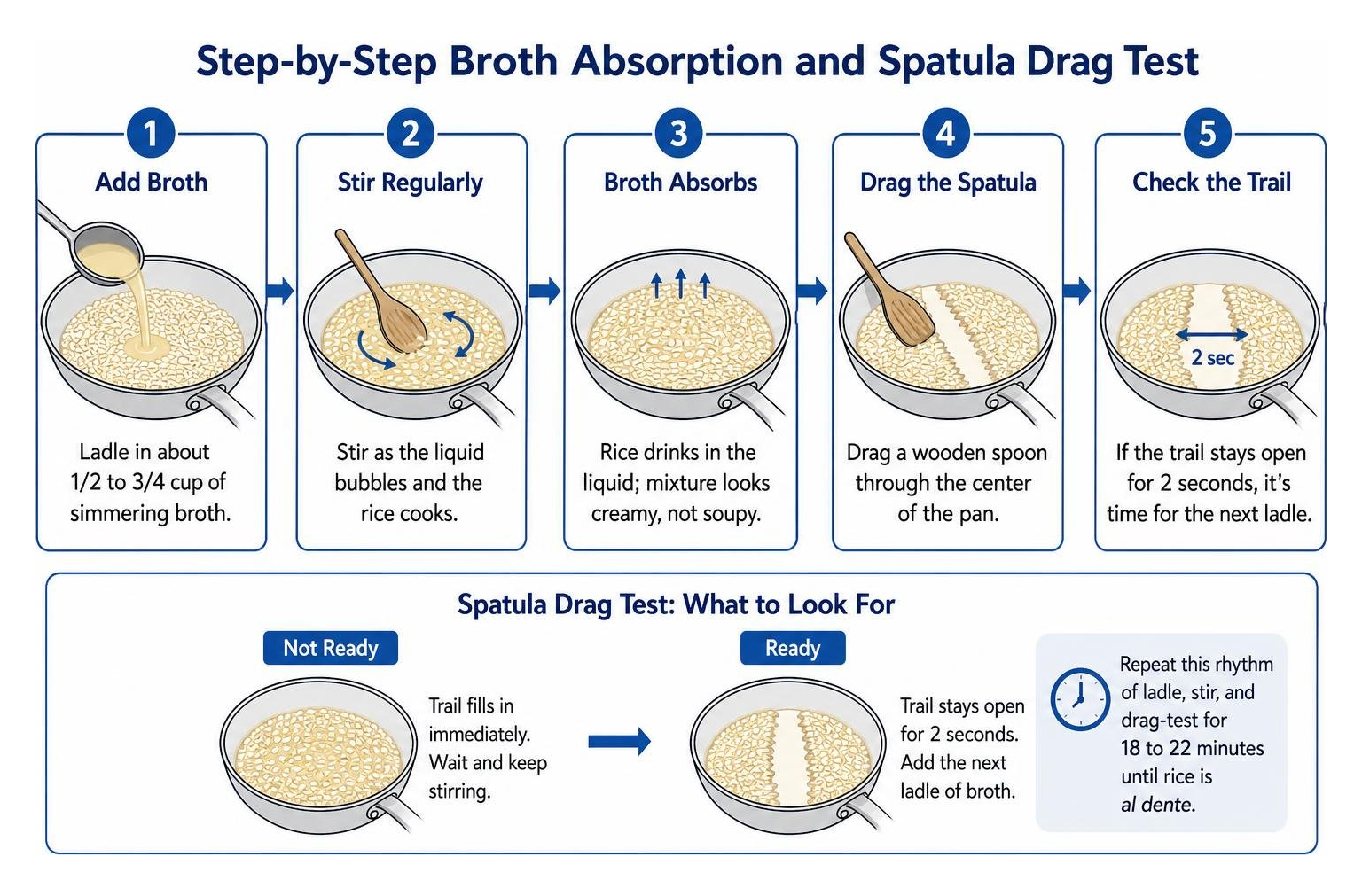
- Add Broth Incrementally: Ladle in roughly 1/2 to 3/4 cup of simmering broth. Stir regularly as the liquid bubbles. Watch as the rice drinks in the liquid. Once you can drag a wooden spoon through the center of the pan and leave an open trail for 2 seconds before the liquid fills back in, it is time for the next ladle.
- Maintain the Simmer: Continue this rhythmic ladle-and-stir process over medium heat. It generally takes 18 to 22 minutes for the rice to reach a true al dente—tender on the outside with a firm, toothsome center.
Adding the Vegetables and Chicken for Optimal Texture
The biggest mistake home cooks make with chicken and vegetable risotto is dumping all the ingredients into the pan at once, which turns delicate greens limp and overcooks the poultry.
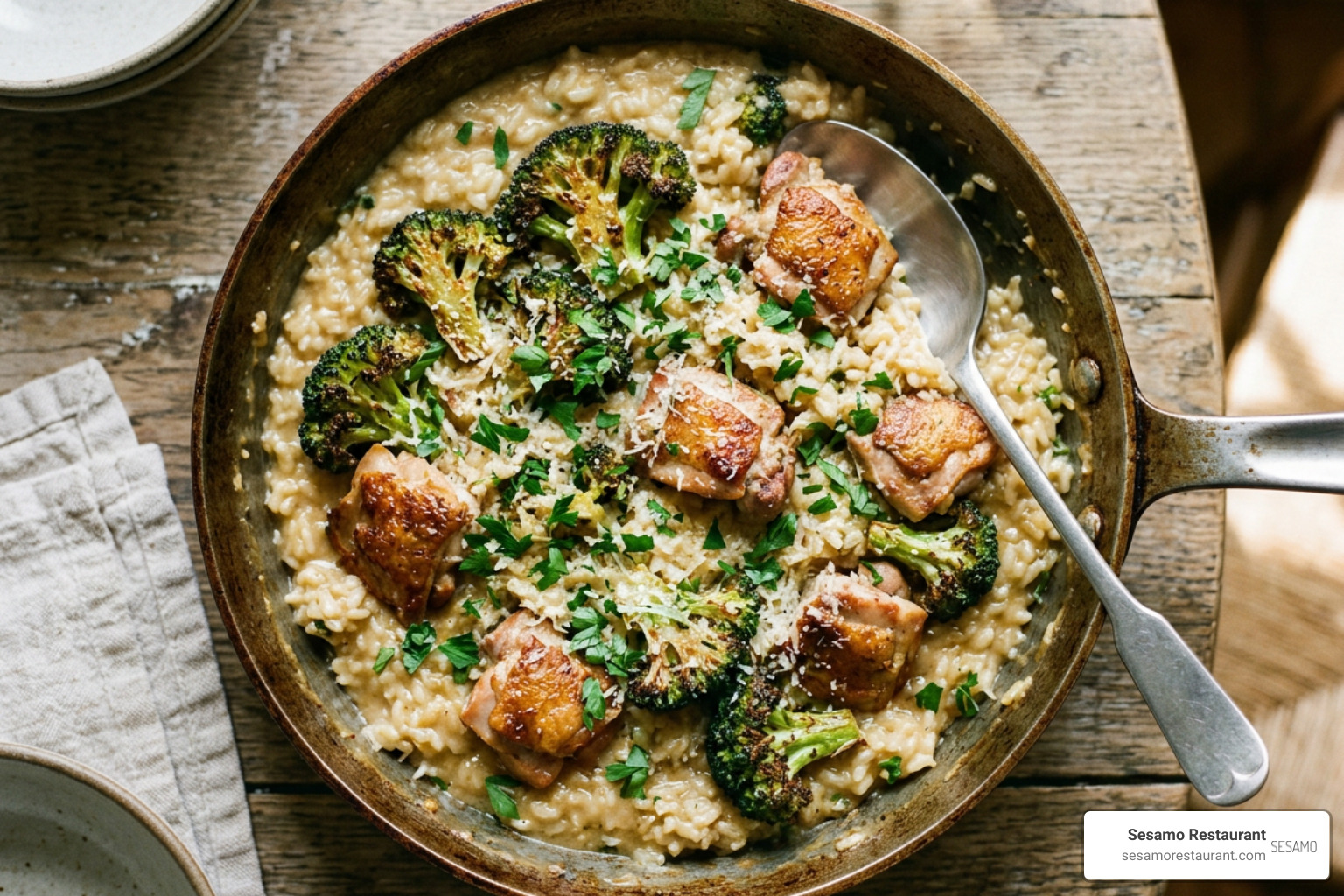
- For Raw Chicken Breast: Sear the seasoned cubed chicken in your skillet with a splash of olive oil before cooking the aromatics. Cook until golden brown on all sides (about 4 to 5 minutes), transfer to a plate, and set aside. Fold the cooked chicken back into the skillet during the final 5 minutes of rice cooking so it warms through without drying out.
- For Pre-Cooked or Rotisserie Chicken: Shred or cube the cooked meat and fold it into the rice during the last 3 to 4 minutes of cooking. This warms the chicken without stringing or toughening the meat fibers.
- Hearty Vegetables (Broccoli, Carrots, Squash): Roast broccoli florets or diced root vegetables on a sheet pan at 425°F (220°C) for 12 to 15 minutes until caramelized and crisp-tender. Fold them in at the very end to preserve their crisp texture and deep roasted flavor.
- Tender Green Vegetables (Peas, Zucchini, Snow Peas, Baby Spinach): Add diced zucchini and sweet peas during the final 4 minutes of simmering. Add delicate greens like snow peas or baby spinach during the final 60 seconds off the heat alongside the cheese; the residual steam will wilt them to a vibrant, crisp green.
Creative Variations, Upgrades, and Storage Tips
Risotto is a versatile canvas that works with whatever seasonal produce you have in your refrigerator. Mastering the base technique allows you to experiment with creative flavor profiles, dietary adjustments, and convenient weeknight shortcuts.
Modern Twists and Contemporary Flavor Profiles
In our kitchen at Sesamo in Hell’s Kitchen, we love reinterpreting Italian classics through an Asian lens. You can easily elevate a standard weeknight chicken risotto by layering subtle savory ingredients:
- Umami Boosters: Stir 1 teaspoon of white miso paste into your warm chicken broth, or finish the pan with 2 drops of toasted sesame oil alongside the butter during mantecatura.
- Citrus & Herb Accents: Brighten rich poultry flavors with finely grated Meyer lemon zest, fresh chopped tarragon, or torn Thai basil leaves just before serving.
- Mushroom & Ginger Layering: Sauté shiitake or cremini mushrooms with finely grated fresh ginger before toasting the rice to build an earthy, warming aromatic foundation.
Exploring creative interpretations like Fusion Risotto NYC shows how cross-cultural seasonings breathe new life into time-honored dishes.
Healthier Adaptations for Chicken and Vegetable Risotto
A classic restaurant risotto can sometimes feel heavy, but home preparations are easy to lighten while keeping every bit of flavor:
- Double the Vegetable Ratio: Increase the volume of nutrient-dense greens like spinach, kale, roasted cauliflower, and zucchini. This yields larger, more satisfying portions with fewer overall calories per serving.
- Use Lean Proteins: Skinless chicken breast provides roughly 30 to 35 grams of lean protein per serving, keeping the dish filling and macro-balanced.
- Lower the Sodium: Utilize homemade, unsalted bone broth or low-sodium stock, letting fresh herbs, garlic, cracked black pepper, and high-quality cheese provide the primary seasoning.
- Dairy-Free & Gluten-Free Options: Arborio rice is naturally gluten-free. For dairy-free dining, omit the butter in favor of high-grade extra virgin olive oil, and swap the Parmesan for nutritional yeast or dairy-free aged cheese alternatives.
Proper Storage, Freezing, and Stovetop Reheating
Rice requires careful food handling. Uncooked rice can carry spores of Bacillus cereus, a bacterium capable of surviving boiling water. If cooked rice sits at room temperature for extended periods, these spores can multiply.
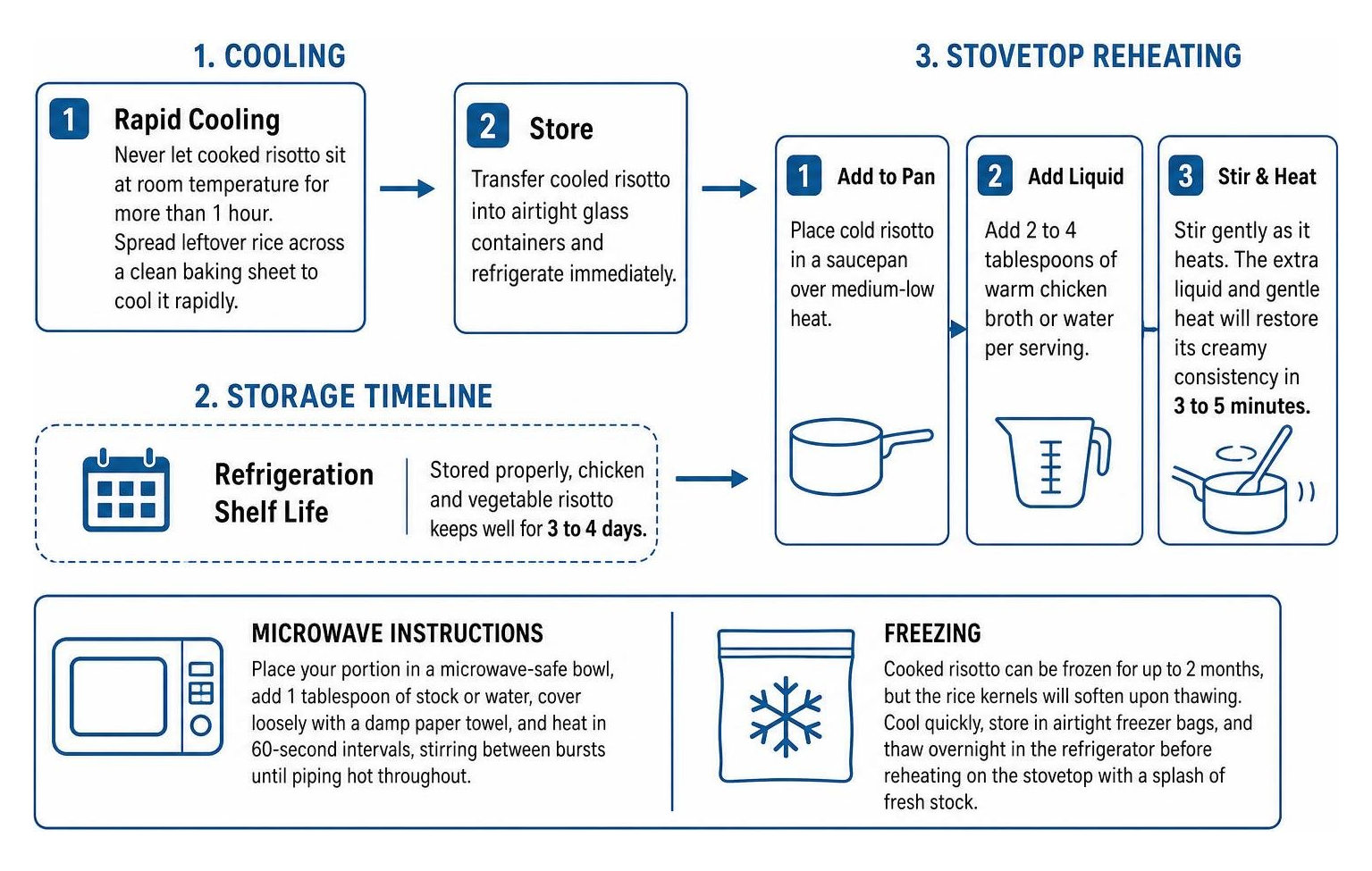
- Rapid Cooling: Never let cooked risotto sit at room temperature for more than 1 hour. Spread leftover rice across a clean baking sheet to cool it rapidly, then transfer it into airtight glass containers and refrigerate immediately.
- Refrigeration Shelf Life: Stored properly, chicken and vegetable risotto keeps well for 3 to 4 days.
- The Stovetop Reheating Method: Risotto firms up significantly in the fridge because the starches set into a solid gel. To revive its velvety texture, place the cold rice into a saucepan over medium-low heat. Add 2 to 4 tablespoons of warm chicken broth or water per serving, stirring gently as it heats. The extra liquid and gentle heat will restore its creamy consistency in 3 to 5 minutes.
- Microwave Instructions: Place your portion in a microwave-safe bowl, add 1 tablespoon of stock or water, cover loosely with a damp paper towel, and heat in 60-second intervals, stirring between bursts until piping hot throughout.
- Freezing: While cooked risotto can be frozen for up to 2 months, the rice kernels will soften upon thawing. If freezing, cool the dish quickly, store in airtight freezer bags, and thaw overnight in the refrigerator before reheating on the stovetop with a splash of fresh stock.
Frequently Asked Questions About Chicken Risotto
Can I use leftover or rotisserie chicken in this recipe?
Yes. Using shredded rotisserie chicken or roasted leftovers is one of the easiest ways to turn risotto into a fast 30-minute weeknight meal. Because the poultry is already cooked, skip the initial chicken-searing step. Prepare your aromatic base, toast the grains, simmer with stock, and fold the shredded chicken into the pan during the final 3 to 4 minutes of cooking so it absorbs the flavors without drying out.
Why is my risotto crunchy or overly mushy?
Both issues stem from heat management and liquid balance:
- Crunchy Risotto: If the grains are chalky or hard in the center, the rice is simply undercooked. This happens when the heat is too high (evaporating broth before the starch cooks through) or when you haven’t added enough liquid. Lower the flame, ladle in an extra 1/2 cup of warm broth, and continue simmering until the core softens to a gentle al dente.
- Overly Mushy Risotto: Mushy risotto is the result of overcooking, adding too much liquid at once, or boiling the rice on low heat like porridge. Always use medium heat for a steady simmer, add broth incrementally, and pull the pan off the burner while the grains still retain a clean, defined structure.
Can risotto be made ahead of time for dinner parties?
Yes, by using the par-cooking method favored by professional restaurant kitchens:
- Cook the risotto through the standard steps, but stop halfway through the broth addition (around the 10 to 12-minute mark), when the rice is still firm and chalky in the center.
- Immediately spread the par-cooked rice across a large rimmed baking sheet in a thin layer to stop the cooking process and cool it down quickly.
- Cover and refrigerate the par-cooked rice for up to 24 hours.
- When you are ready to serve, return the rice to a hot skillet, resume ladling in simmering stock, fold in your chicken and vegetables, and finish with cold butter and cheese. In less than 10 minutes, you will have fresh, creamy risotto ready for guests.
Conclusion
Mastering a creamy, restaurant-quality chicken and vegetable risotto comes down to a few basic kitchen habits: choosing high-starch Italian rice, maintaining warm simmering stock, toasting the grains, and emulsifying with cheese and butter off the heat. It is a satisfying, customizable dish that turns simple pantry staples and seasonal vegetables into pure comfort food.
Whenever you find yourself in Manhattan looking to explore refined Italian cuisine enriched with creative culinary pairings, come visit our dining room at Sesamo in Hell’s Kitchen. Until then, explore our guide to the 10 Italian dishes everyone should know and bring the warmth of authentic, scratch-made cooking to your own kitchen table.